
3 Ways the 2027 Chevrolet Bolt Keeps Charging Simple for Everyday Drivers
July 24 2026,
Shopping for an EV in Quebec often means picturing a tangle of charging cables and adapters before you even get behind the wheel. The 2027 Chevrolet Bolt was built to simplify that from the plug on down. Here are three ways its charging system changes the daily routine of owning an EV.
1. One Native Charging Port, Fewer Adapters
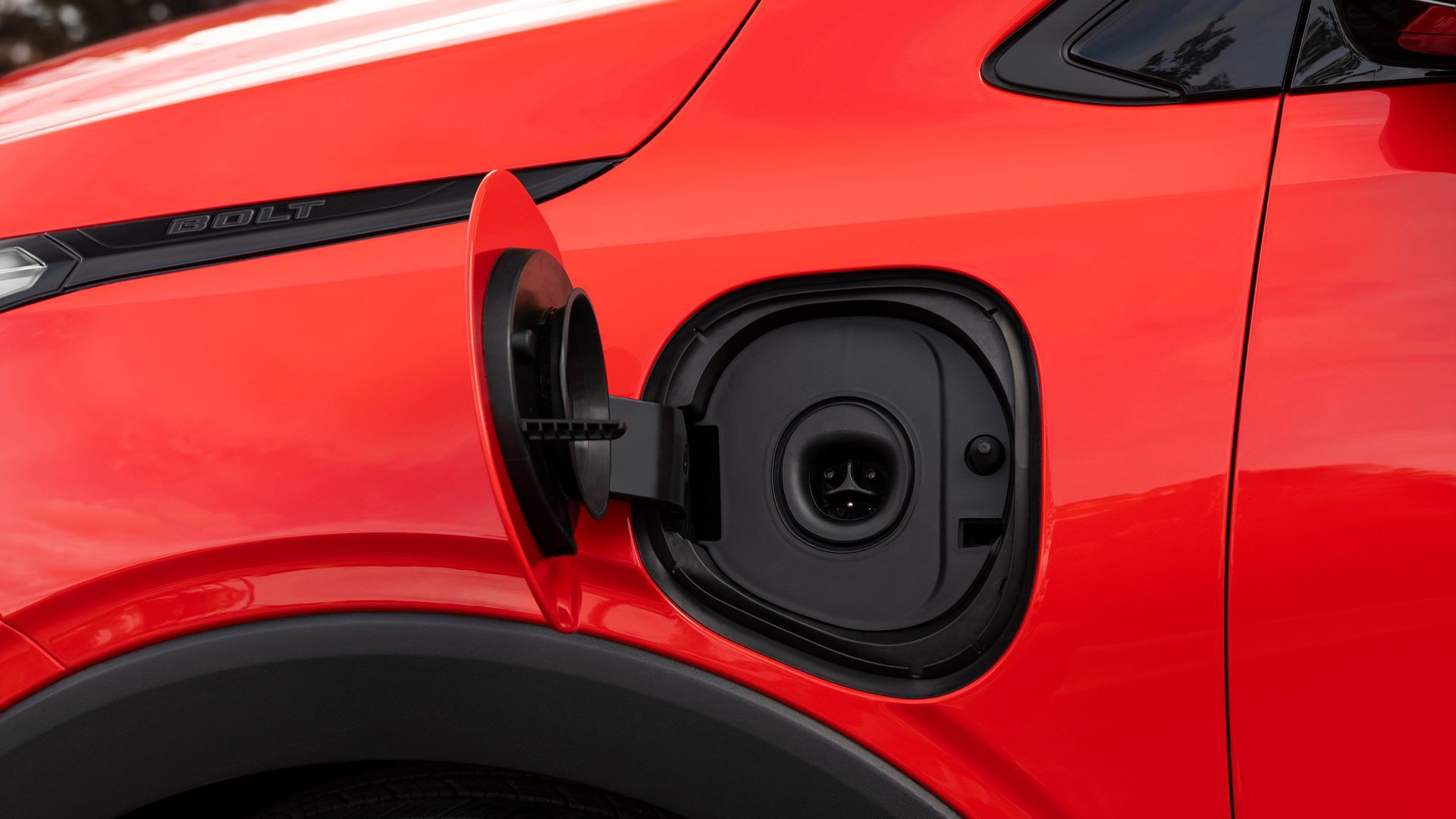
The 2027 Bolt is the first Chevrolet built with a native NACS (North American Charging Standard) port, standard on both the LT and RS trim. That means the connector at most public fast chargers plugs directly into the car, without a separate adapter piece to keep track of.
GM still offers a CCS1 DC adapter and a J1772 AC adapter as available accessories, so stations built to those older standards stay reachable. An illuminated charge port, also available, makes lining up the connector easier at night. A standard charge-station communication module handles the connection between the car and the charger, part of what keeps a public charging stop straightforward.
2. Faster Public Fast-Charging
Public DC fast charging on the 2027 Bolt now tops out at 150 kW, letting the battery move from 10% to 80% in about 26 minutes. That is more than 2.5 times faster than the previous-generation Bolt managed at a public charger.
In practice, that turns a fast-charging stop into something closer to a lunch break than an afternoon-long wait. For drivers covering longer highway stretches across Quebec, that speed changes how often a trip needs to pause for a charge at all. Because the fast-charging hardware runs through the same native NACS port, no adapter changes hands during the stop either.
3. Home Charging Sized to How You Actually Drive

More than 80% of Canadian EV owners plug in at home rather than searching for a public charger every day, and the 2027 Bolt’s home-charging hardware is built around that habit. Both LT and RS trims come standard with an 11.5 kW onboard charging module and a dual-level charge cord that works with either a 120V household outlet or a 240V connection.
|
Charging Method |
Approximate Range Added |
|
120V household outlet |
6 km per hour |
|
240V dual-level cord (7.7 kW) |
42 km per hour |
|
240V home charging station (11.5 kW) |
64 km per hour |
|
DC fast charging (150 kW) |
10% to 80% in 26 minutes |
A dedicated 240V home station needs a professionally installed 60A circuit, sold separately, but even the included cord on a 240V outlet adds enough overnight range to cover most daily driving. The 65 kWh lithium iron phosphate battery carries a GM-estimated range of up to 410 km on a full charge, backed by an 8-year/160,000 km battery warranty.
Because the charging hardware is identical across the lineup, the choice between LT and RS comes down to styling and equipment, not charging speed. Drivers without driveway access still lean on the 150 kW public charging speed, while a home 240V setup covers most overnight needs on its own. Beyond charging, the 2027 Bolt also arrives with a refreshed exterior, an 11.3-inch Google built-in touchscreen, and the new RS trim with unique badging and gloss-black wheels, though the charging hardware behind every trim stays the same.
The 2027 Chevrolet Bolt Makes Charging Straightforward
The 2027 Chevrolet Bolt pairs a native NACS port, 150 kW public fast charging, and an 11.5 kW home-charging setup to remove much of the friction from everyday EV ownership. Every trim shares the same charging hardware, so speed and simplicity carry through the lineup.
Visit Vision Chevrolet Buick GMC in Delson to see the 2027 Bolt’s charging setup in person and ask how the included cord and onboard charger fit your home. Our team can also walk you through the LT and RS trims side by side.